
Updated: July 8, 2026 · 9 min read
Placeit is a large template library, not a wall-art-specific tool — and that distinction is exactly what decides whether it is worth switching away from. If you sell framed prints or posters and buyers keep asking "how big is this really," a broad template library is the wrong tool for the job. If wall art is one product among many things you sell, Placeit's breadth might still be the better fit.
This is a direct look at Placeit for wall art sellers specifically: pricing, template breadth versus wall-art precision, true-scale sizing (or the lack of it), export quality, and who should actually switch versus who should stay. If you already know the answer, skip ahead and see why WallMockup is the focused Placeit alternative for wall art.

Table of Contents
- What is Placeit?
- Where Placeit works for wall art sellers
- Where Placeit falls short for wall art sellers
- Placeit pricing vs. a focused wall art tool
- Who should switch away from Placeit?
- Who should stick with Placeit?
- How to test a Placeit alternative before switching
- Key Takeaways
- FAQ
What is Placeit?
Placeit is a template-based design platform owned by Envato, the same company behind Envato Elements and ThemeForest. According to Envato's own history, Placeit was acquired in 2019 and folded into Envato's subscription ecosystem. Its catalog spans apparel mockups, device mockups, packaging, logo makers, video intros, social media templates, and — as one category among dozens — wall art and poster mockups.
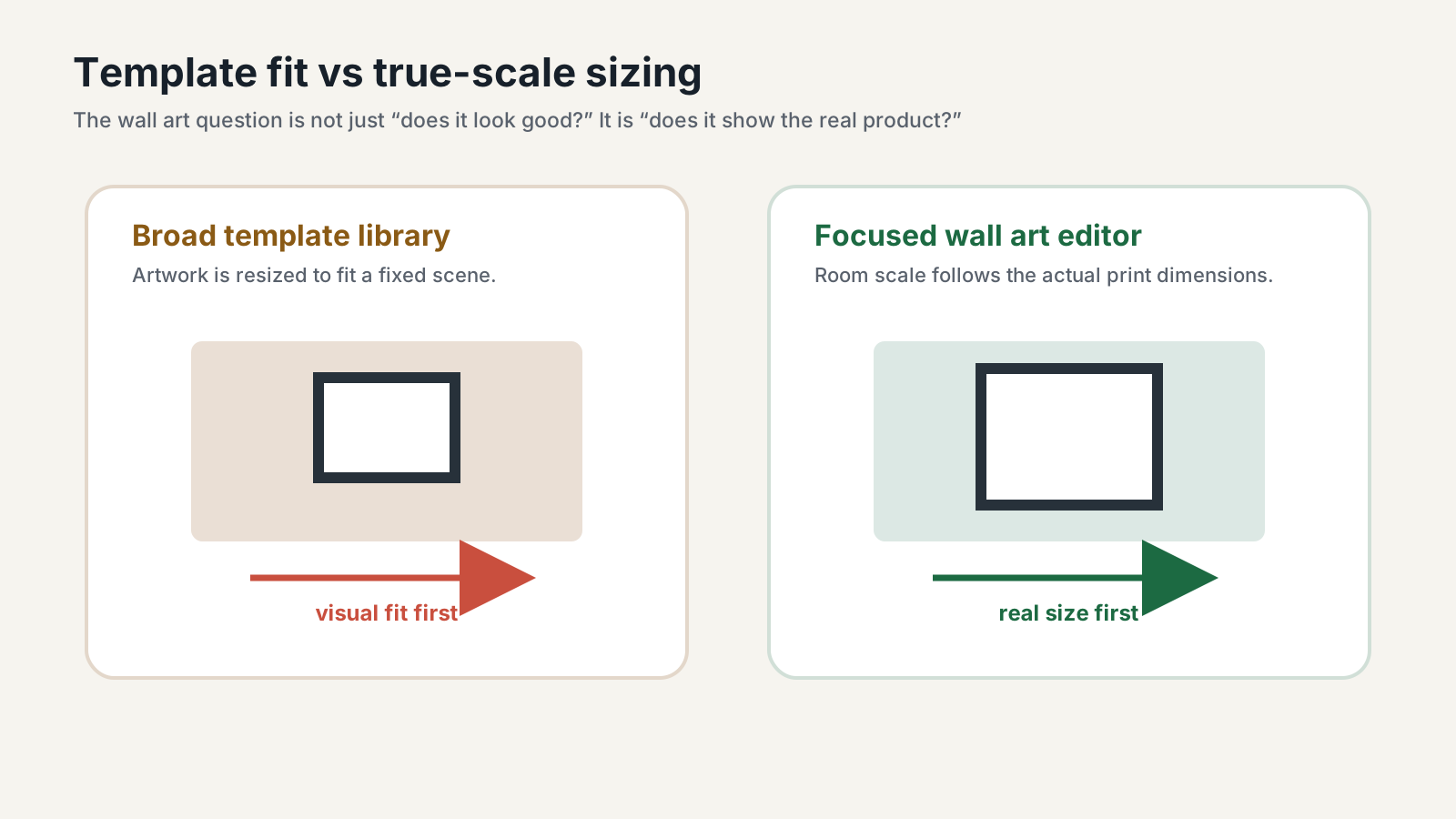
That "one category among dozens" framing matters. Placeit was built to be a general creative asset library, not a tool purpose-built for wall art sellers who need buyers to trust an exact size before they buy.
Where Placeit works for wall art sellers
Placeit earns its subscription price when your shop sells more than wall art. If you also need apparel mockups for a merch line, device mockups for a digital product, or a quick logo, one Placeit plan covers all of it instead of stitching together several specialized tools.
What Placeit does well for wall art specifically:
- Volume. Thousands of templates, including a reasonable spread of room scenes and frame styles for posters and prints.
- Speed for casual use. Drop in artwork, pick a template, export. No account setup beyond signing in.
- Style variety. Templates cover different aesthetics — minimalist, boho, modern, gallery — without you needing to source or shoot your own room photography.
- One subscription, many asset types. If wall art is 10% of your catalog, Placeit can be the cheaper overall choice.
Where Placeit falls short for wall art sellers
The gap shows up the moment size accuracy matters to the sale — which, for wall art, is almost always.
No true-scale sizing. Placeit templates are built to look good at a fixed template size, not to represent your actual print dimensions. There is no "enter 16x20 inches and see it rendered at accurate proportion in the room" workflow. The art is resized to fit the template frame, not the other way around. For furniture-relative sizing — is this poster going to look right above an 84-inch sofa — that is a real gap, not a cosmetic one.
Frame control is template-fixed. The frame you see in a Placeit mockup is baked into that template. You cannot independently adjust frame color, profile, or shadow depth to match the actual product a buyer will receive. If your shop sells a black frame and gold frame variant, you are hunting for two separate templates rather than adjusting one.
Wall-art-specific precision is secondary. Placeit's product roadmap serves apparel, video, and social content as much as it serves print sellers. Improvements to wall-art-specific features — accurate scale, frame matching, room variety for print buyers — are not the platform's main focus.
Export quality and watermarking. Free/trial exports are typically watermarked, and paid exports are resolution-capped by plan tier rather than optimized specifically for large-format print listings. Verify current export resolution and licensing on Placeit's own site before publishing — plan tiers and limits change.
Placeit pricing vs. a focused wall art tool
Do not compare sticker price alone — compare cost per usable wall art export. Placeit generally offers a subscription model (with the option for single-template one-off purchases) that unlocks its full catalog across all asset types. That is efficient if you're using ten categories. It's a poor rate if you're only ever opening the wall art folder.
A dedicated wall art tool like WallMockup prices around wall art specifically: a free trial to test true-scale sizing before paying anything, then credit packs or a flat monthly rate for unlimited wall-art exports. There's no "apparel tax" baked into the price for a feature set you never touch.
| Placeit | Dedicated wall art tool | |
|---|---|---|
| True-scale sizing | No — template-fixed | Yes — enter real dimensions |
| Frame control | Template-fixed overlay | Adjustable per export |
| Asset breadth | Very broad (apparel, video, social, wall art) | Wall art and posters only |
| Best value when | Wall art is one of many product types | Wall art is your core product |
| Export precision for large prints | Plan-dependent, not print-optimized | Built around print/listing use |
For a full five-way breakdown that also covers ArtPlacer, Canva, and Photoshop, see the best art mockup tools guide.
Who should switch away from Placeit?
Switch if any of these are true:
- Buyers regularly ask "what size is this really" in your Etsy or Shopify messages.
- You sell multiple print sizes and need the size difference to actually read in the mockup.
- You offer more than one frame color or style and need to swap it per listing without hunting for a new template.
- Wall art is your primary or sole product line, not a side category.
- You're paying for a broad subscription but only ever use the wall art templates.
If any two of these describe your shop, the switching cost is usually paid back within a handful of listings — a mismatched-size return or a confused-buyer refund costs more than a month of a focused tool.
Who should stick with Placeit?
Stay if wall art is genuinely one product among several very different ones — say, you sell apparel, mugs, and posters from the same shop, and you need one subscription that covers all of it without juggling logins. Stay too if you're a hobbyist seller publishing a handful of listings a year, where template speed matters more than precision.
How to test a Placeit alternative before switching
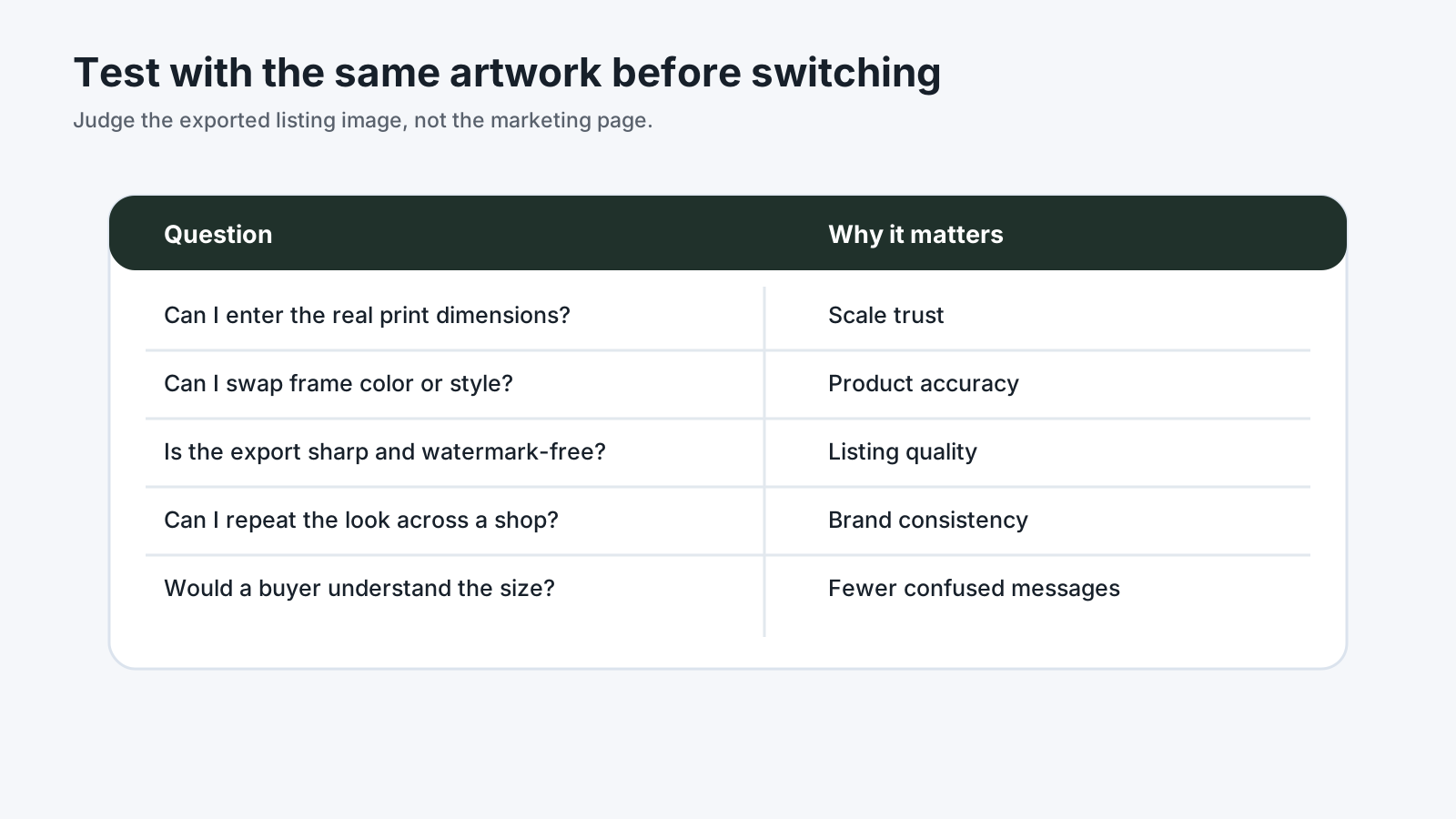
Don't decide from marketing pages. Use the same artwork in both tools and compare the actual output:
- Upload one print file to Placeit and to a wall art alternative.
- Set the real dimensions in the alternative tool; note whether Placeit lets you do the same.
- Export both at your typical listing size and compare sharpness and any watermarking.
- Try swapping the frame color in each — time how long it takes.
- Ask: would a buyer understand the true size from this image alone?
If the wall-art-specific tool wins on questions 2 through 5, the switch is worth it even at a small cost difference.
Key Takeaways
- Placeit is a broad template library; wall art is one category among many, not its focus.
- It lacks true-scale sizing and independent frame control — both matter for buyer trust in wall art listings.
- Placeit is the right call when wall art is a minor part of a multi-product shop.
- A dedicated wall art tool pays for itself once size accuracy affects returns or buyer questions.
- Test both tools with the same artwork before committing to either.
FAQ
Is Placeit good for wall art mockups?
It can work for casual or occasional listings, especially if you already use Placeit for other product types. It is not built for true-scale sizing or precise frame matching, which matters more as your wall art catalog grows.
What is the biggest difference between Placeit and a dedicated wall art mockup tool?
Scale accuracy. Placeit fits your art into a fixed template; a dedicated tool like WallMockup lets you enter the real print dimensions so the art renders at accurate proportion in the room.
Is Placeit cheaper than a wall art mockup tool?
It depends on what you use it for. If you only need wall art mockups, a focused tool's wall-art-specific pricing is usually more cost-effective than a broad subscription covering asset types you don't use.
Can I use Placeit and a dedicated wall art tool together?
Yes. Some sellers use Placeit for non-wall-art assets (social posts, apparel) and a dedicated tool for wall art listings where size accuracy drives buyer decisions.
Does Placeit support true-scale sizing for posters?
No. Placeit templates are sized for visual fit, not for representing exact print dimensions. If true scale matters to your buyers, that is the main reason to consider an alternative built for wall art.
Try the wall-art-specific alternative
If size accuracy and frame control matter more to your shop than template breadth, see why WallMockup is the focused Placeit alternative for wall art sellers — start with the free trial and compare one real listing image against your current workflow.
For a broader tool comparison including ArtPlacer, see ArtPlacer vs WallMockup vs Placeit.