
Updated: July 8, 2026 · 8 min read
Realistic mockups increase art sales because they answer the buyer's three hardest questions before the description does: how big is it, will it fit my room, and does this seller look trustworthy? A flat artwork image shows the design. A good wall art mockup shows the decision — and the room you choose turns that decision into "that belongs in my home."
Table of Contents
- Why do flat art images lose buyers?
- How does room context change the buying decision?
- How do you choose the right room scene?
- How do mockups reduce size uncertainty?
- Why do realistic images build trust?
- What makes a mockup look realistic?
- What image set should art listings use?
- When will mockups not fix the problem?
Why do flat art images lose buyers?
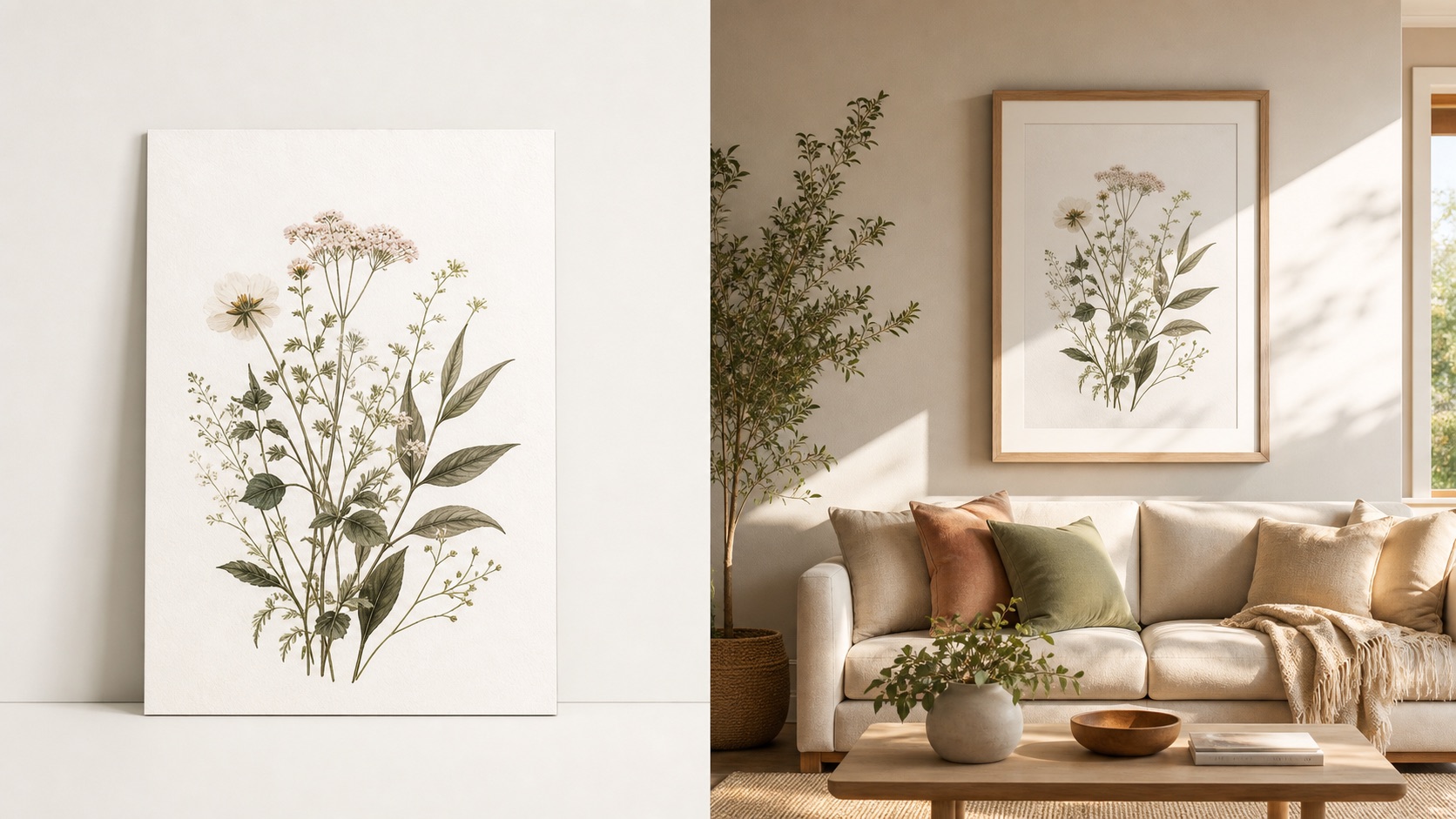
Flat artwork images are clear, but they ask the buyer to do too much work. The buyer has to imagine the scale, the frame, the wall color, and the feeling of the print in a real room. Many shoppers will not make that leap.
A realistic mockup gives them the context immediately. It turns "nice image" into "that could go above my sofa." That shift matters most in fast browsing environments like Etsy, Shopify collections, and social feeds.
The goal is not decoration. The goal is faster understanding.
How does room context change the buying decision?
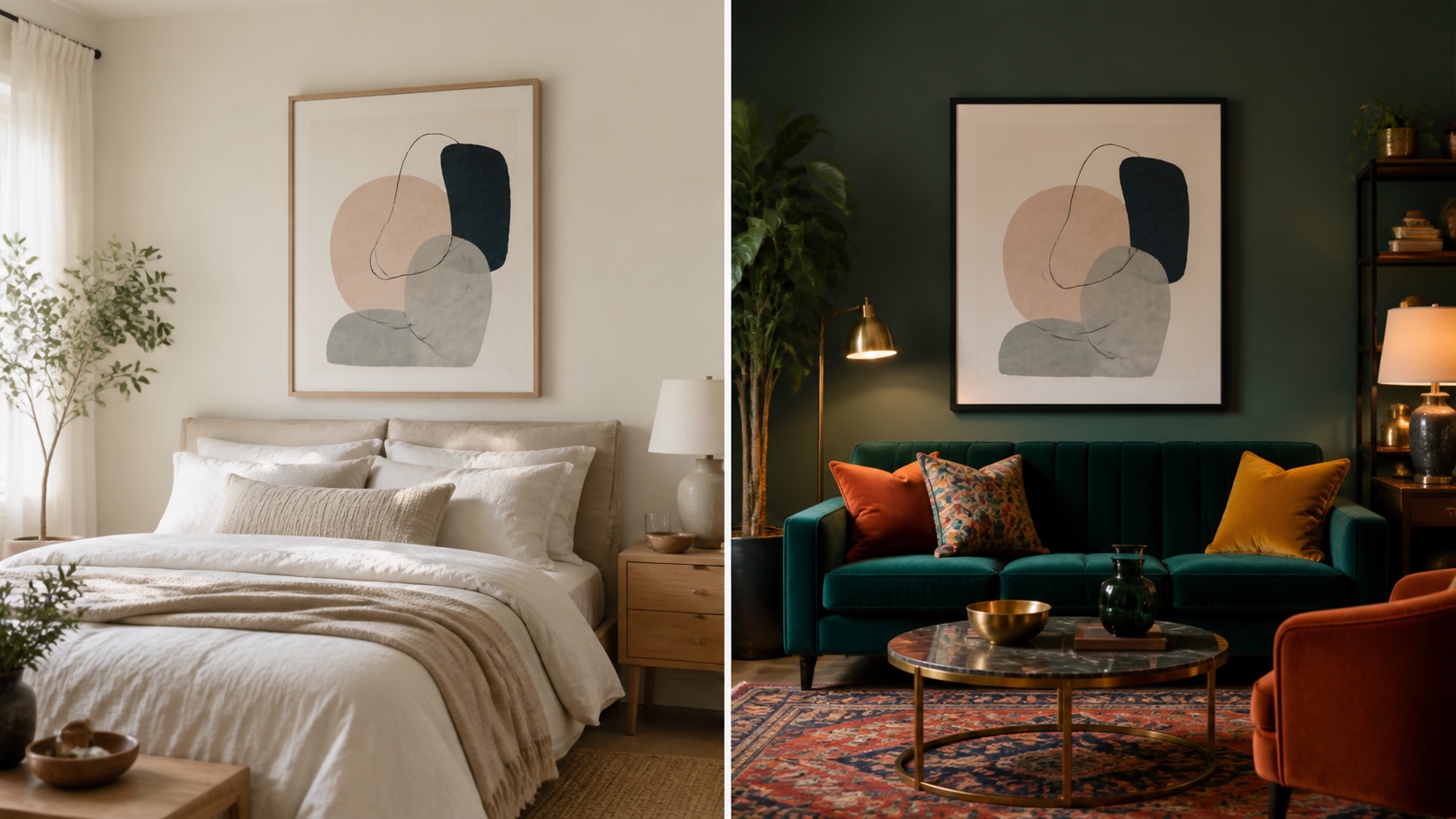
Room context gives the buyer a story. A print in a bright neutral bedroom feels different from the same print in a dark office. The room tells the buyer who the art is for and where it belongs.
That matters because most buyers are not evaluating art in a vacuum. They are thinking about a blank wall, a sofa, a bedroom, a nursery, or a hallway. The mockup bridges the gap between your product and their space — and the room you choose is a positioning decision, not a decoration choice.
If your buyer decorates calm apartments, use calm rooms. If your buyer likes maximalist gallery walls, show richer context. The room should match the target buyer, not just the artwork colors.
How do you choose the right room scene?
Start with the buyer's likely room. For nursery art, choose a nursery or soft bedroom. For photography, choose a simple room that lets detail stand out. For typography, home offices and entryways often make sense.
Then reduce visual noise. The room should support the product. If the background is more interesting than the artwork, choose a simpler scene.
Scene checklist:
- Does the room match the target buyer?
- Does the artwork stay prominent?
- Does the frame fit the product?
- Does the scene match the shop's visual style?
For Etsy sellers, consistency matters as much as accuracy. Choose 2 to 3 primary room scenes and reuse them across a collection so the shop grid looks intentional.
How do mockups reduce size uncertainty?
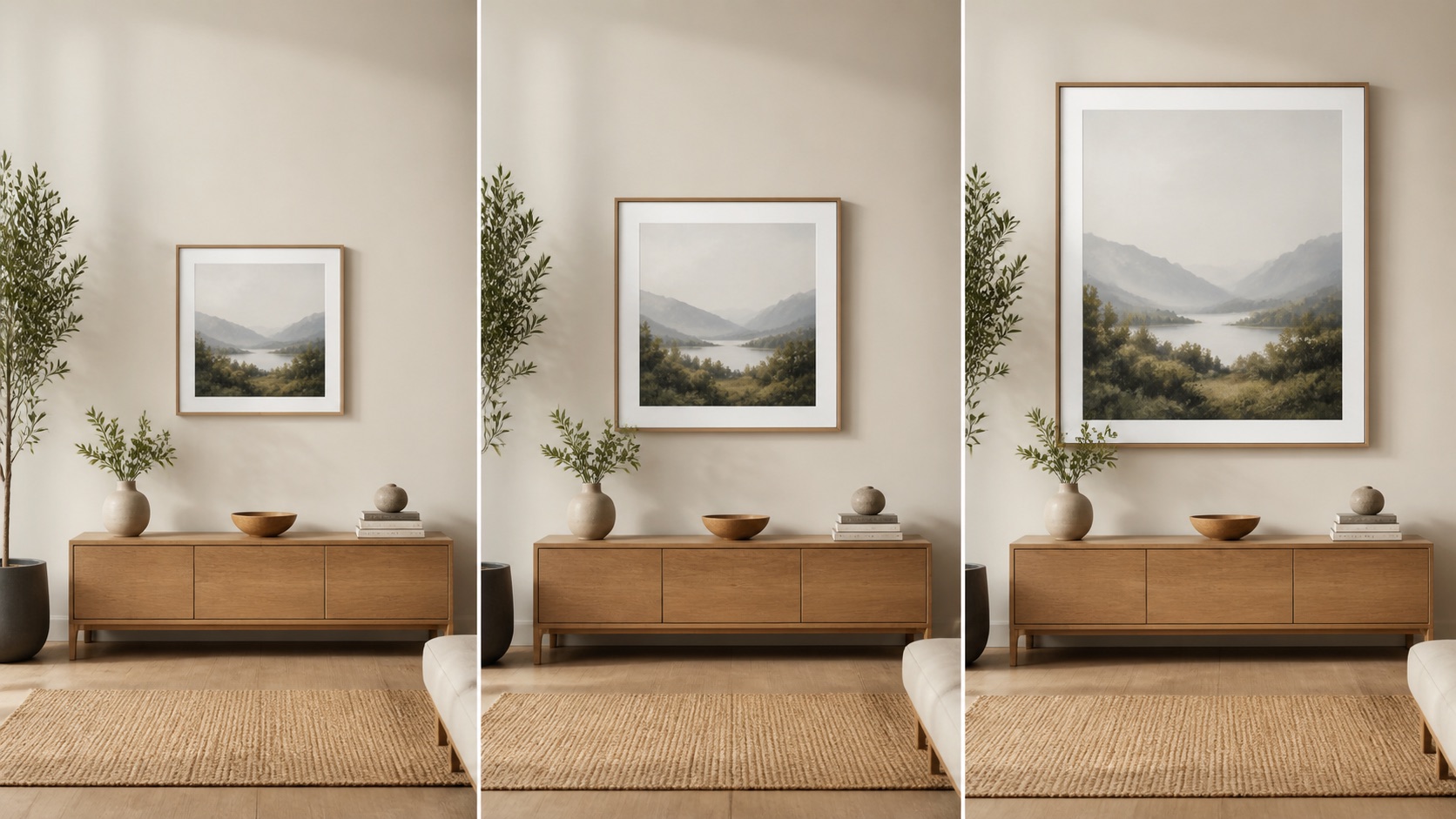
Size uncertainty is one of the biggest blockers for wall art. Buyers may know what 16x20 means on paper, but they do not always know how it feels above a console, bed, or sofa.
A true-to-scale mockup makes the size visible. An 8x10 should look compact. A 24x36 should look substantial. If you sell multiple sizes, showing the same artwork at different scales can reduce confusion before the buyer reaches the product description.
Use the wall art size calculator and frame size chart to choose sizes that fit common walls and frames.
Why do realistic images build trust?
For a newer shop, the listing image is often the main trust signal. Buyers cannot touch the print. They cannot inspect the paper. They judge the seller by the clarity of the presentation.
A realistic wall mockup suggests the seller understands the product and the buyer's concerns. A careless mockup does the opposite. Wrong scale, mismatched frames, and cluttered rooms all create small doubts.
Trust also depends on honesty. If the frame is not included, say so in the listing image. If it is a digital download, make clear that the frame and mat are for display only. Consistent styling across listings builds credibility faster than any single hero image.
Trust signals buyers notice fast:
- Consistent room style across listings.
- Honest frame and mat presentation.
- Clear scale against furniture.
- Sharp artwork detail when zoomed.
For more on why this matters to buyers specifically, see how a wall art mockup helps buyers feel at home before they buy.
What makes a mockup look realistic?
Realism comes from several small decisions working together. The artwork must match the listed size. The frame should look physically attached to the wall. The shadow should follow the room lighting. The room should fit the artwork's mood without stealing attention.
Do not over-style the scene. A room can be beautiful and still be bad for selling if the buyer notices the furniture first. The art should remain the focus.
For a step-by-step workflow, read How to Create Wall Art Mockups Without Photoshop. Use the print resolution checker before scaling artwork to larger print sizes.
What image set should art listings use?
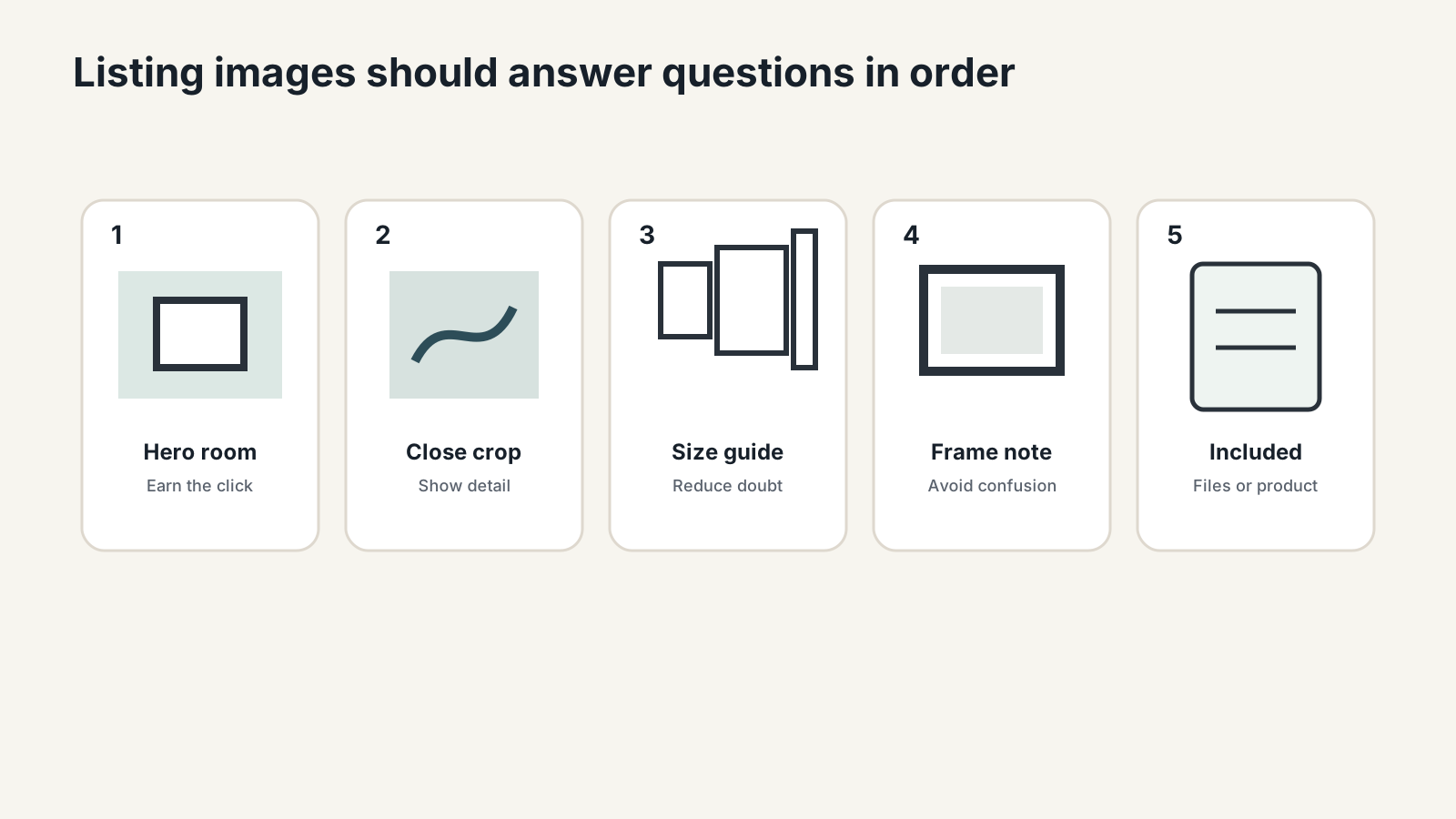
Most art listings need more than one image, but they do not need ten random images. Build a set that answers the buyer's actual questions.
Use this 5-image set:
- Hero wall mockup.
- Artwork close-up.
- Size-reference image.
- Frame or mat detail.
- What-is-included image.
If you sell digital downloads, the final image is especially important. Make clear that the buyer receives files, not a physical frame. If you sell physical prints, show what ships and what is only styling.
When will mockups not fix the problem?
Mockups improve presentation. They do not create demand by themselves. If a listing gets impressions and clicks but no sales, mockups may be a strong lever. If it gets no impressions, the problem may be keywords or niche. If it gets no favorites, the product itself may need work.
Use mockups as a diagnostic tool. Change the first image, then watch click-through. Add a size reference, then watch questions and conversion. Keep what reduces buyer hesitation.
Better presentation should make a good product easier to buy. It should not hide what the product really is.
Key Takeaways
- Realistic mockups work because they show scale and room context together.
- Room choice is a positioning decision — it tells the buyer who the art is for.
- Consistent room scenes across a shop build more trust than a single great image.
- True-to-scale sizing matters more than decorative rooms.
- Trust depends on honest frames, sizes, and clear product details.
- Listing images should answer buyer questions, not just fill image slots.
- Mockups help presentation, but they cannot replace product demand.
FAQ
Do realistic mockups really help sell art?
Yes, when the artwork already has demand. Mockups work by making scale, room context, and product expectations clearer — which reduces buyer hesitation at the point of decision.
How does room context affect art sales?
Room context gives buyers a story. The right room shows who the art is for and where it belongs. Choosing a room that matches your target buyer is a positioning decision that affects whether shoppers can picture owning the piece.
What makes a wall art mockup look fake?
Wrong scale, heavy shadows, mismatched lighting, busy rooms, and frames that do not match the product all make mockups feel fake.
What room should I use for an art mockup?
Use a room that matches your target buyer and keeps the artwork as the visual focus. Avoid rooms where the furniture or background competes with the print.
Should I use mockups for digital art downloads?
Yes, but label the product clearly. The mockup shows what the file can look like when printed, not what arrives in the mail.
How many mockups should I use in a listing?
Use 3 to 5 focused images: a hero room mockup, close-up detail, size reference, frame or mat detail, and what-is-included image.
Create a clearer listing image
Create one honest, true-to-scale listing image in the WallMockup editor. Start with a room that fits your buyer, set the real print size, and use that image as your first listing photo.
See also: The Complete Guide to Wall Art Mockups for how this fits into the full mockup and listing process.