
Updated: July 8, 2026 · 7 min read
Hang most wall art so the center of the artwork sits about 57 inches from the floor. Above furniture, leave 6 to 10 inches between the furniture and the bottom of the frame, then size the artwork or grouping to roughly 60% to 75% of the furniture width. Plan on paper first. Drill last.
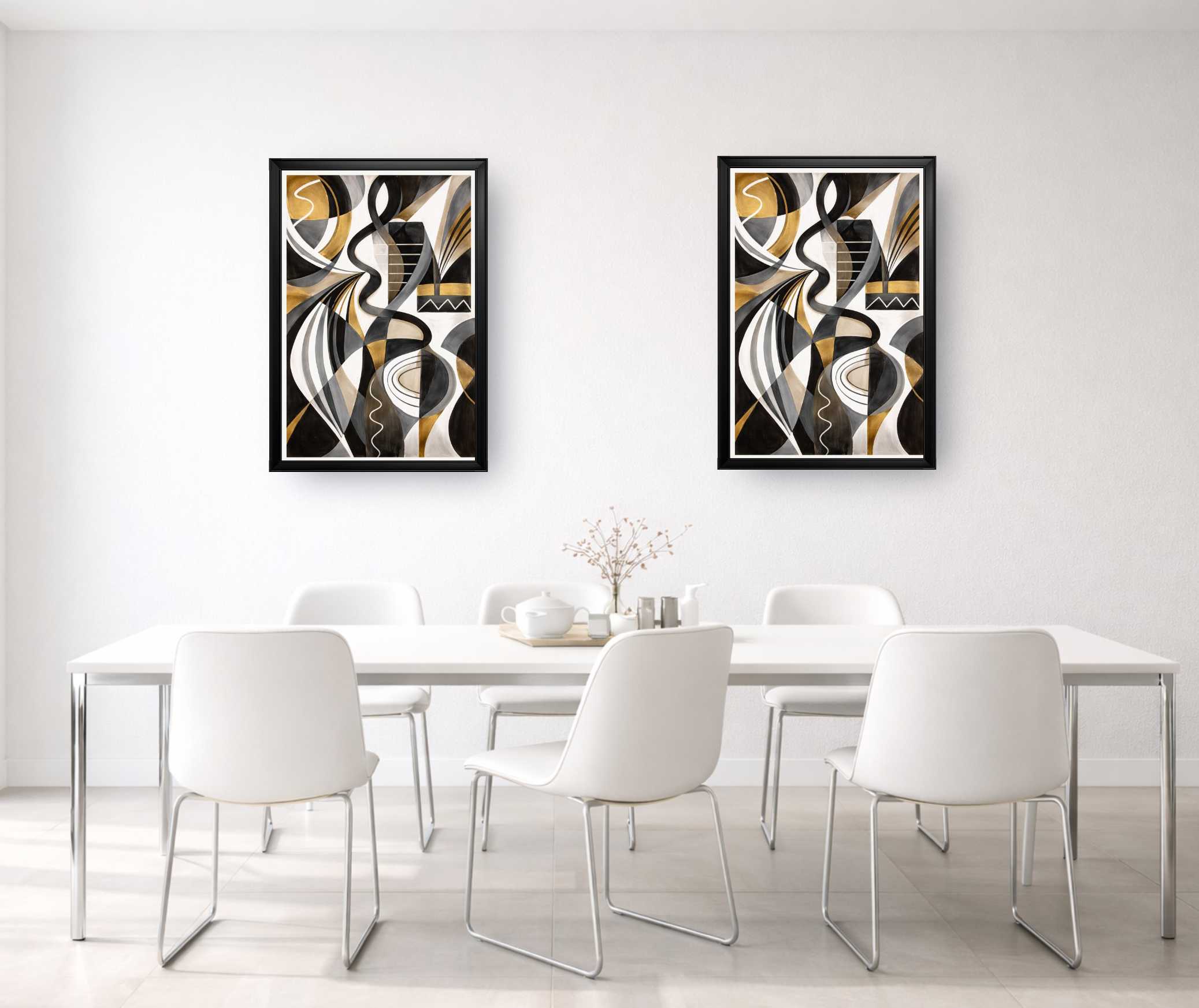
Table of Contents
- How high should wall art hang?
- How do you calculate the nail height?
- How high should art hang above a sofa, bed, or console?
- How much space should be between frames?
- How do you plan a gallery wall?
- What hardware should you use for wall art?
- How can you preview wall art before hanging it?
- Key Takeaways
- FAQ
How high should wall art hang?
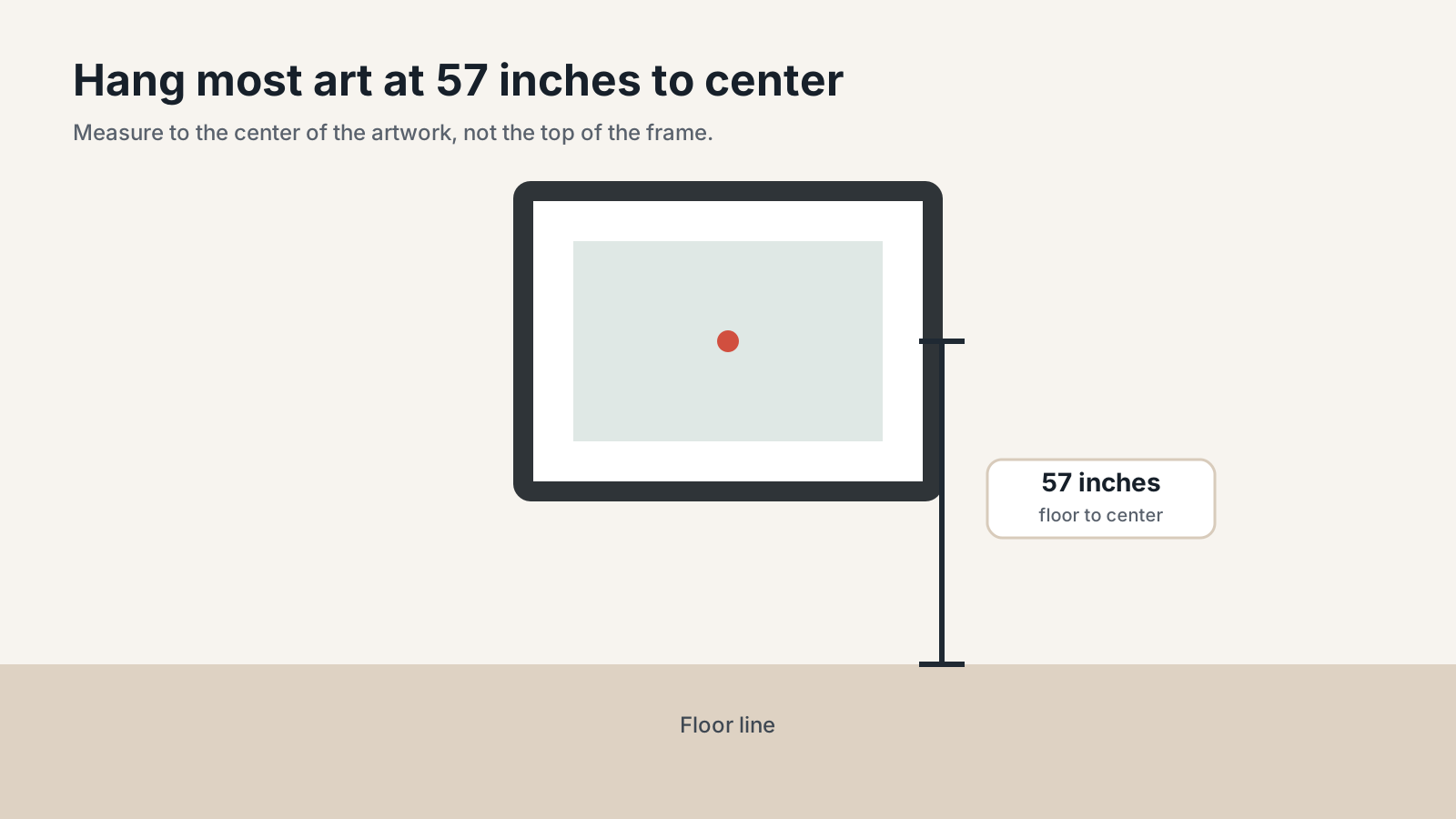
The most useful starting point is the 57-inch center rule: place the center of the artwork about 57 inches from the floor. That height is widely used because it puts art near eye level and keeps rooms from feeling like the artwork is floating too high.
It is a guideline, not a law. In a room where people sit most of the time, slightly lower can feel better. In a hallway or open wall, 57 inches is usually a clean default. Architectural Digest's picture frame hanging guide describes the same museum-style center-height rule.
| Situation | Starting height | Adjustment |
|---|---|---|
| Single piece on open wall | 57 inches to artwork center | Use 57 to 60 inches if the room feels tall |
| Above sofa or bed | 6 to 10 inches above furniture | Center on the furniture, not the full wall |
| Gallery wall | 57 inches to group center | Treat the whole group as one artwork |
| Kids room or seated viewing area | Slightly lower than standard | Match the viewer and furniture height |
Before making holes, preview the artwork at real scale in the WallMockup editor. It is easier to adjust a mockup than patch a wall.
How do you calculate the nail height?
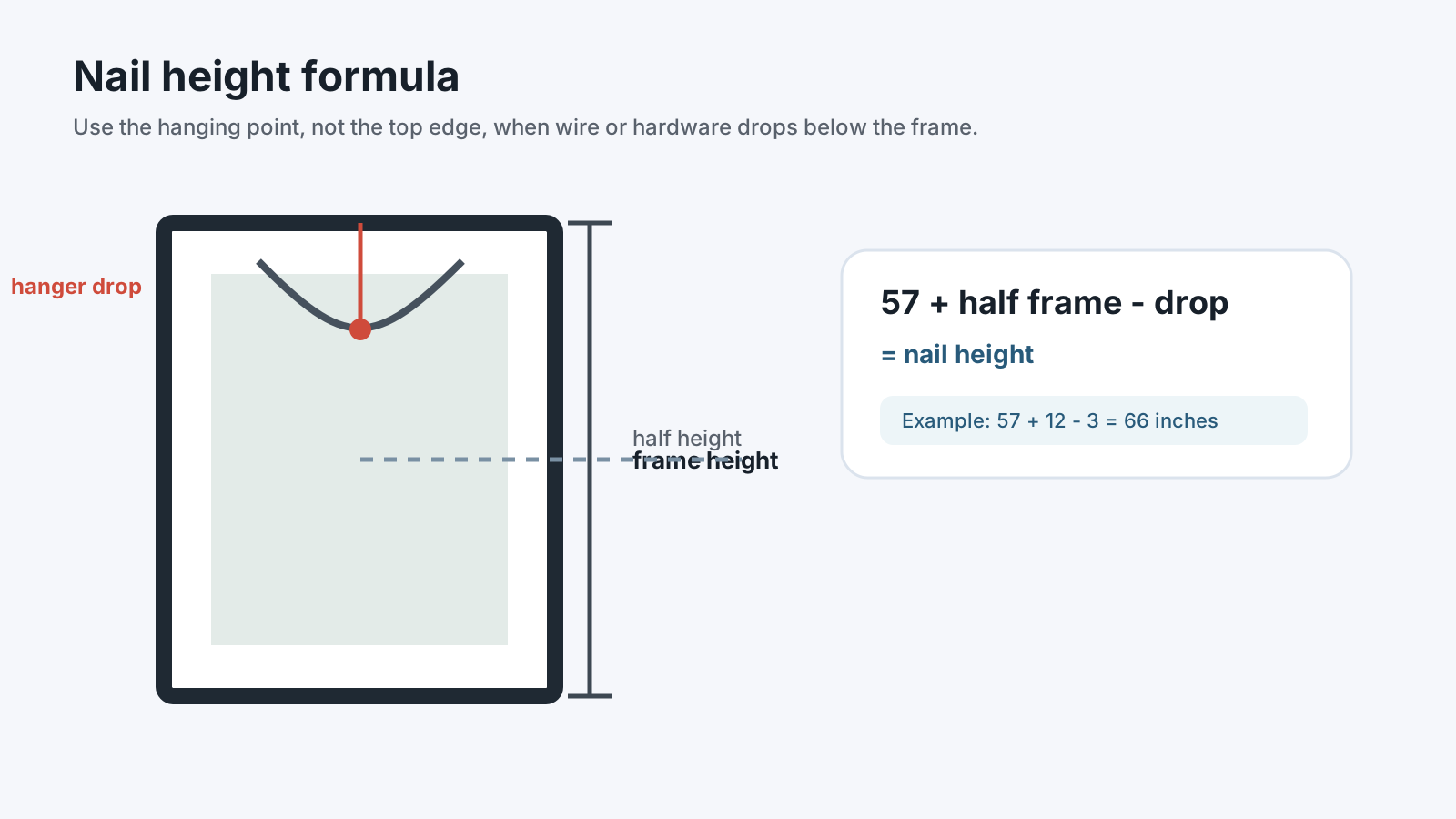
To calculate the nail height, measure the frame height and divide it by two. Add that number to 57 inches. Then subtract the distance from the top of the frame to the tightened hanging wire, sawtooth hook, or D-ring.
Formula: 57 + half the frame height - hanger drop = nail height.
Example: a 24-inch-tall frame has a 12-inch center. If the hanging wire sits 3 inches below the top when pulled tight, the nail goes at 66 inches: 57 + 12 - 3.
| Frame height | Half height | Hanger drop | Nail height |
|---|---|---|---|
| 16 inches | 8 inches | 2 inches | 63 inches |
| 24 inches | 12 inches | 3 inches | 66 inches |
| 36 inches | 18 inches | 4 inches | 71 inches |
This calculation matters more for wire-hung frames because the wire rises under tension. For two D-rings or a cleat, measure from the top of the frame to the actual hanging point.
How high should art hang above a sofa, bed, or console?
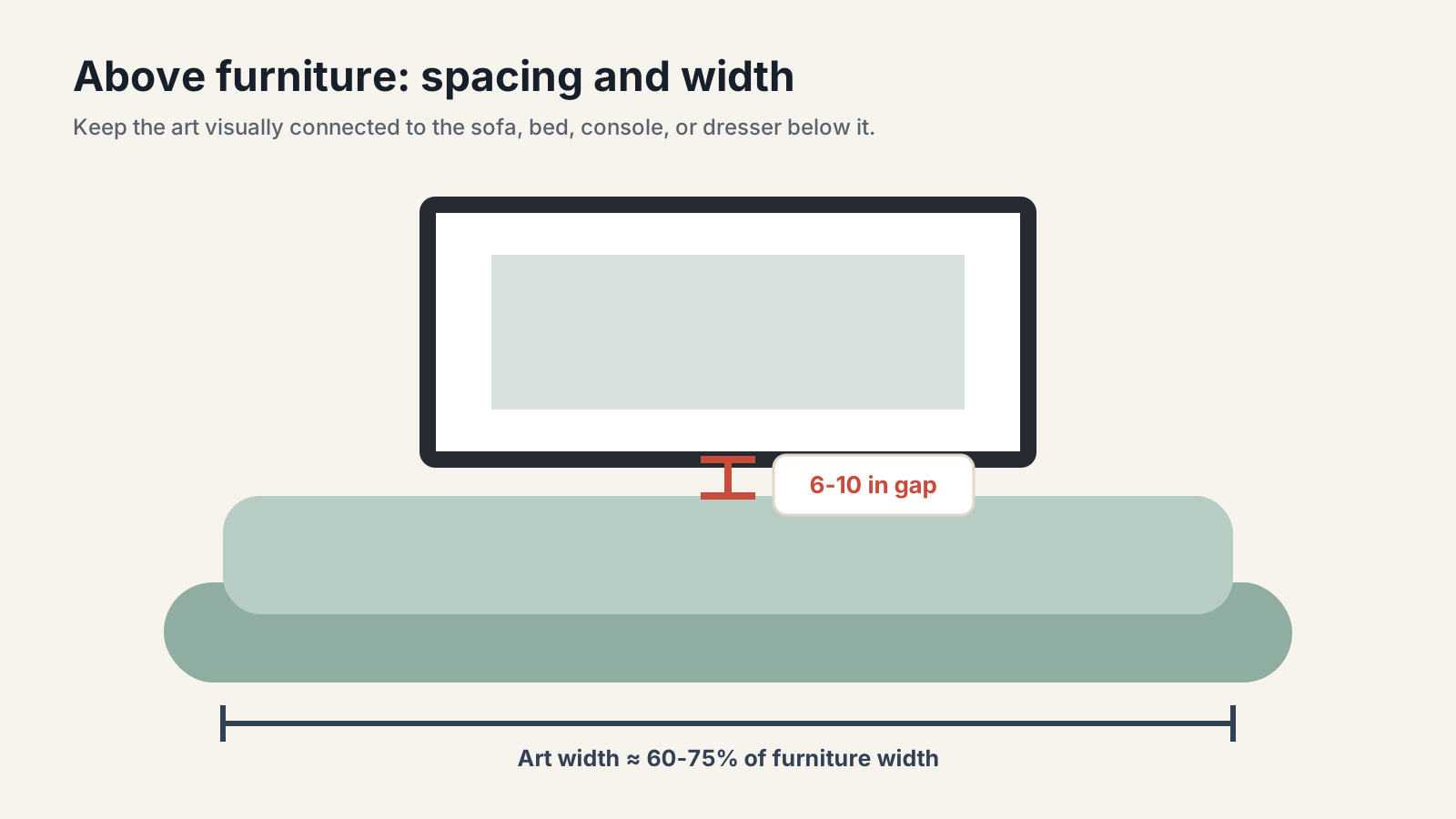
When art hangs above furniture, the furniture relationship matters more than the open-wall rule. Leave 6 to 10 inches between the top of the furniture and the bottom of the frame. The art and furniture should read as one composition, not two unrelated objects.
Width matters too. A single piece or grouped arrangement usually feels balanced at 60% to 75% of the furniture width. Over an 84-inch sofa, that means art roughly 50 to 63 inches wide.
| Furniture width | 60% art width | 75% art width |
|---|---|---|
| 60 inches | 36 inches | 45 inches |
| 72 inches | 43 inches | 54 inches |
| 84 inches | 50 inches | 63 inches |
| 96 inches | 58 inches | 72 inches |
Use the wall art size calculator when you want a quick recommendation based on furniture width.
How much space should be between frames?
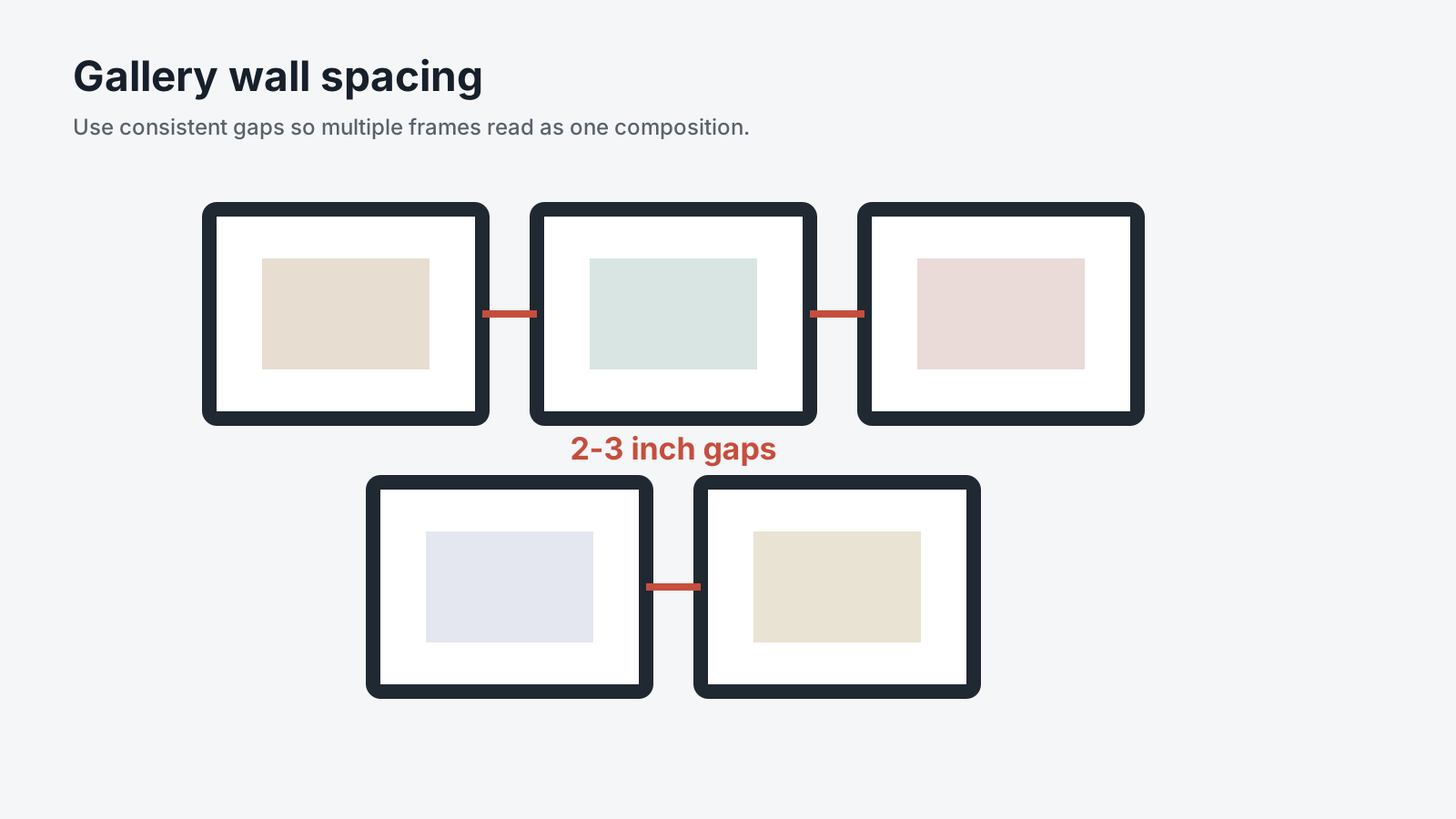
For grouped frames, consistency matters more than the exact number. Use 2 to 3 inches between frames for most gallery walls. Tight spacing makes the group feel like one large composition. Wider spacing can work, but uneven gaps make the arrangement look accidental.
Small frames usually need tighter spacing. Large frames can handle slightly more air. Keep the outside edge of the whole group balanced and treat the arrangement as one artwork when measuring height.
| Frame group | Recommended gap | Best use |
|---|---|---|
| Small prints | 1.5 to 2.5 inches | Grid walls, shelves, small hallway groupings |
| Medium gallery wall | 2 to 3 inches | Most living rooms, bedrooms, and offices |
| Large frames | 3 to 4 inches | Oversized pieces, open walls, statement groups |
Check the frame size chart before mixing sizes that do not naturally relate to each other.
How do you plan a gallery wall?
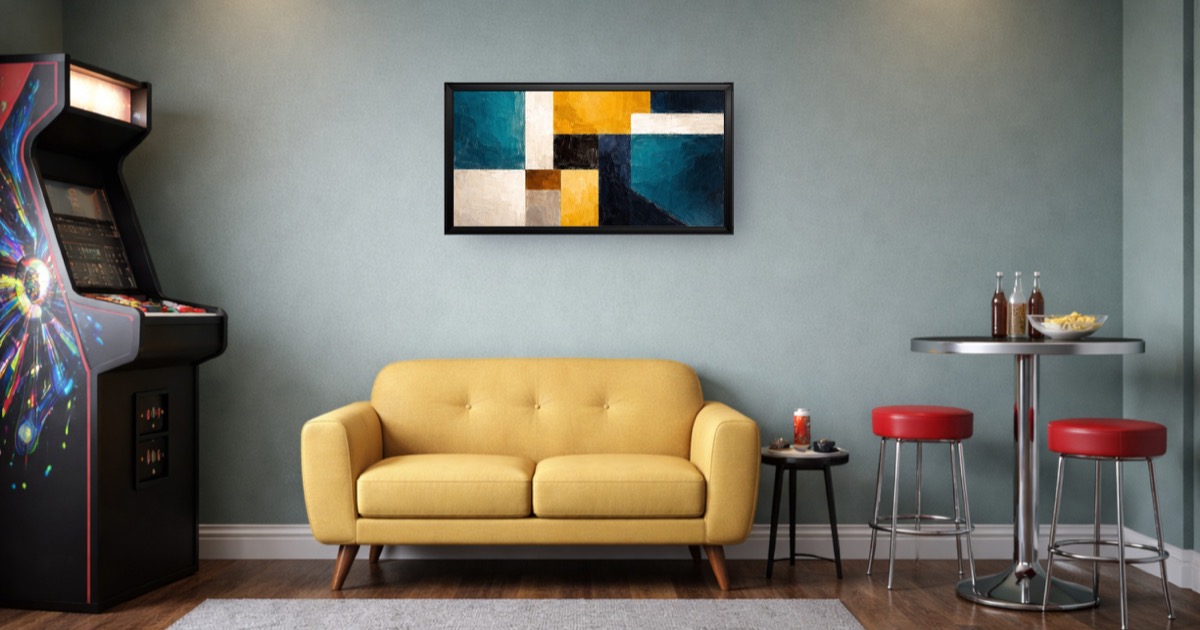
Start with the total shape, not the first nail. Decide whether you want a grid, a centered cluster, or a collected arrangement. Then build the layout on the floor or tape paper templates to the wall.
For the full layout process — grid, salon, and linear patterns, plus how to mock up the arrangement before buying frames — see How to Plan a Gallery Wall Layout.
A clean gallery wall usually has one anchor piece, repeated spacing, and at least one repeated element: frame color, mat style, subject, or palette. Without repetition, a gallery wall can look accidental even when each print is strong.
Gallery wall planning steps:
- Measure the wall or furniture width.
- Choose the outside width of the full arrangement.
- Place the largest or most important piece first.
- Keep gaps consistent.
- Center the full group around 57 inches or above the furniture.
- Tape paper templates before drilling.
The gallery wall layout planner can turn frame count, wall width, and print size into a balanced starting arrangement.
What hardware should you use for wall art?
Use hardware rated for the finished weight of the piece, including the frame, glass, mat, and backing. Lightweight prints can often use picture hooks. Heavier frames need stronger anchors, studs, or two hooks spaced apart.
Better Homes & Gardens recommends checking the weight of each artwork before choosing nails, hooks, or wall anchors. That is the right starting point: the wall type and weight should decide the hardware, not whatever is already in the drawer.
| Artwork type | Hardware direction | Extra check |
|---|---|---|
| Light print or small frame | Picture hook or small nail | Confirm the hook rating |
| Medium framed print | Rated hook, two hooks, or wall anchor | Check hanger type and wall material |
| Large or heavy frame | Stud, heavy-duty anchor, or cleat | Use two people and verify level |
| Plaster, brick, or masonry | Surface-specific anchor | Pre-drill or use proper masonry hardware |
For a detailed hardware overview, see Better Homes & Gardens' guide to hanging pictures securely.
How can you preview wall art before hanging it?
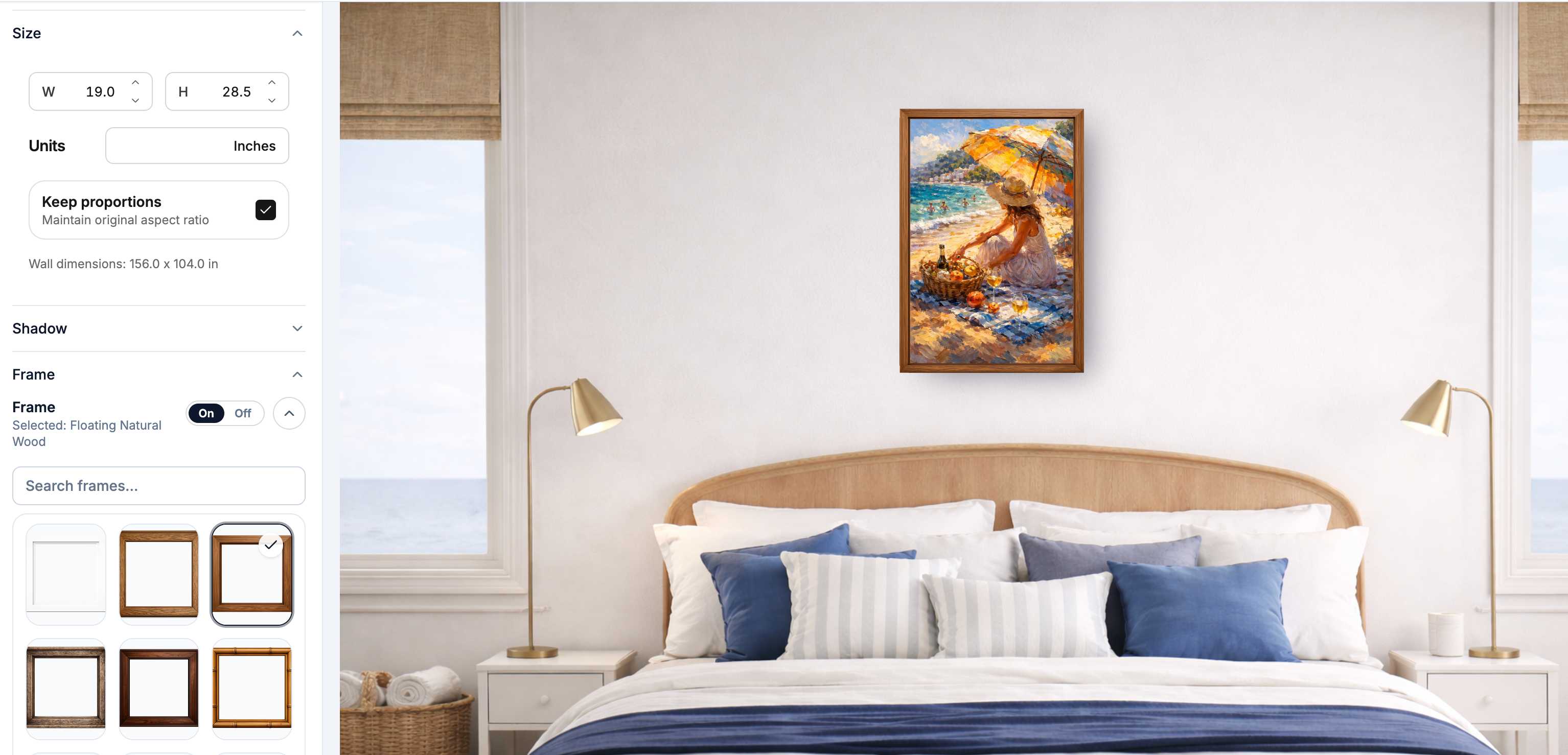
The cheapest mistake is one you catch before drilling. Preview the artwork at real dimensions first, especially above sofas, beds, consoles, and gallery walls. This helps you avoid buying a print that looks too small once it is on the wall.
Use WallMockup to place the artwork in a realistic room, set the actual width and height, and compare frame options. For buying or selling prints, true scale is more useful than guessing from a product photo.
For seller-focused sizing help, compare the poster and art-print size guide with the common frame sizes guide.
Key Takeaways
- Center most single artworks around 57 inches from the floor.
- Above furniture, leave 6 to 10 inches between the furniture and frame.
- Size art or grouped arrangements to about 60% to 75% of furniture width.
- Keep gallery wall spacing consistent, usually around 2 to 3 inches.
- Choose hardware based on finished weight and wall material.
FAQ
What is the 57-inch rule for hanging art?
The 57-inch rule means the center of the artwork sits about 57 inches from the floor. It is a reliable starting point for single pieces on open walls.
How high should art hang above a sofa?
Leave about 6 to 10 inches between the top of the sofa and the bottom of the frame. The artwork or group should usually span 60% to 75% of the sofa width.
How far apart should gallery wall frames be?
Use about 2 to 3 inches between frames for most gallery walls. Keep the spacing consistent across the whole arrangement.
Should art be centered on the wall or furniture?
When art hangs above furniture, center it over the furniture. On an open wall, center it in the wall area or visual zone.
What is the safest way to hang heavy wall art?
Use hardware rated for the finished frame weight and appropriate for the wall material. For large or heavy art, use two hooks, studs, heavy-duty anchors, or a cleat.
Preview before you drill
Before you make holes, test the size in the WallMockup editor. Set the real dimensions, compare frames, and confirm the artwork feels right in the room.
See also: The Complete Guide to Wall Art Mockups for how hanging fits into the full mockup and listing process.