Frame shopping gets confusing for one simple reason: an "11x14 frame" does not necessarily measure 11x14 inches on the wall. That number usually describes the print it holds. Add a mat and a wide frame profile, and the finished piece can be several inches larger in both directions.
So before choosing a frame, write down two measurements: the size of the print and the amount of wall space you want the finished piece to fill. The charts below will help with the first. For the second, a good starting point is to make art above furniture about 60% to 75% as wide as the furniture itself.
Table of Contents
- Print size, frame size, and outer size
- Common wall art frame sizes
- Choosing a size for art above furniture
- When a mat helps (and when it does not)
- Matching aspect ratios to frame sizes
- A practical size range for artists selling online
- How to choose a frame size
- FAQ
The short version
- Start with the print dimensions, not the empty wall or the frame's outside edge.
- For art above a sofa, bed, or console, try a finished width equal to 60% to 75% of the furniture width. Treat that as a starting point, not a law.
- Common, easy-to-frame print sizes include 8x10, 11x14, 12x16, 16x20, 18x24, and 24x36 inches.
- A mat can turn a small print into a medium-size finished piece, so include it in your wall measurements.
- If you sell art online, show the print size, the finished framed size, whether a mat is included, and at least one room image with believable scale.
Print size, frame size, and outer size
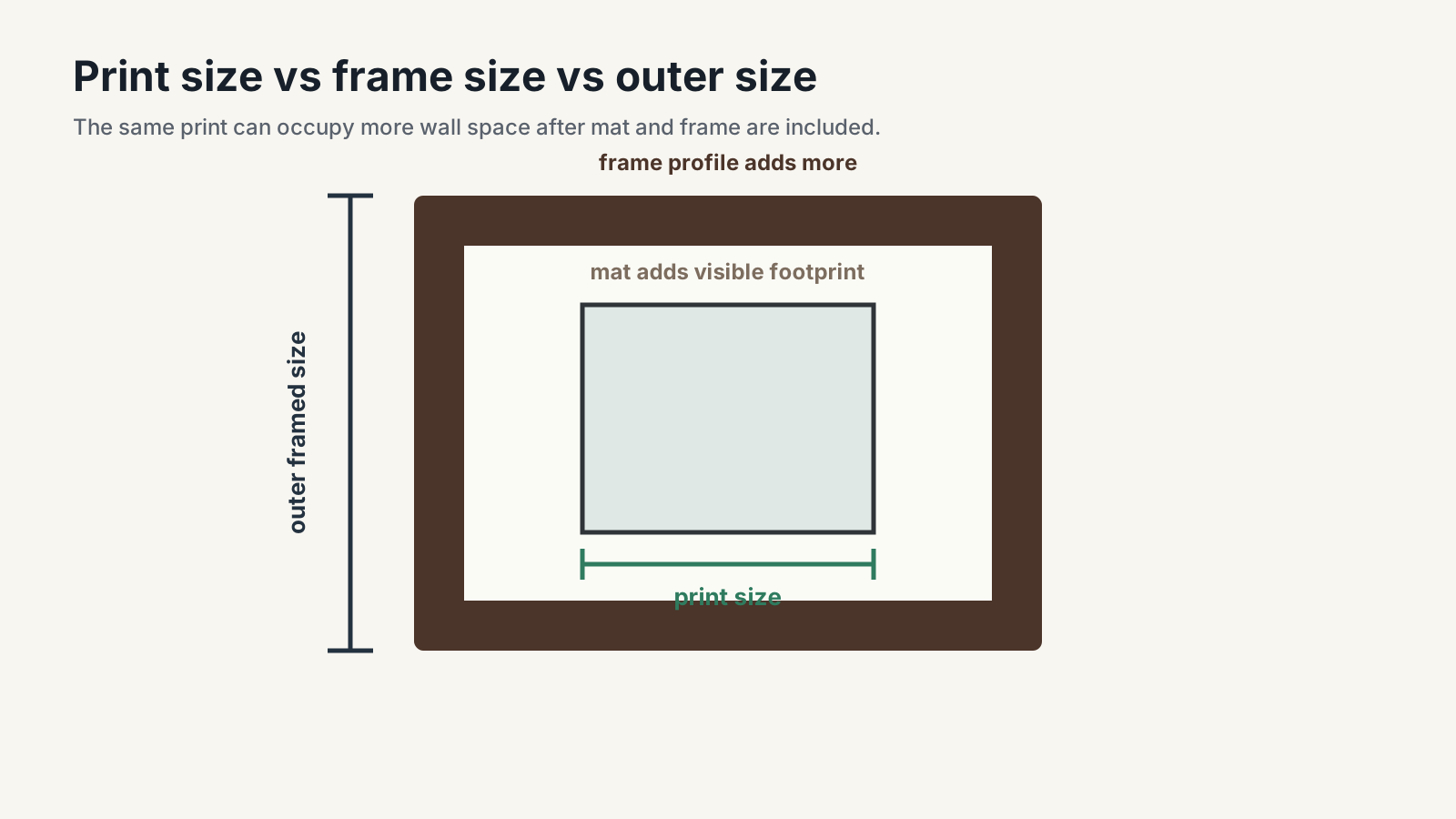
These terms sound interchangeable until you are standing in the frame aisle with a tape measure. They describe different parts of the finished piece:
- Print size is the physical size of the paper or artwork.
- Frame size on a retail label usually refers to the print the frame is designed to hold.
- Outer size is the complete footprint of the frame on the wall.
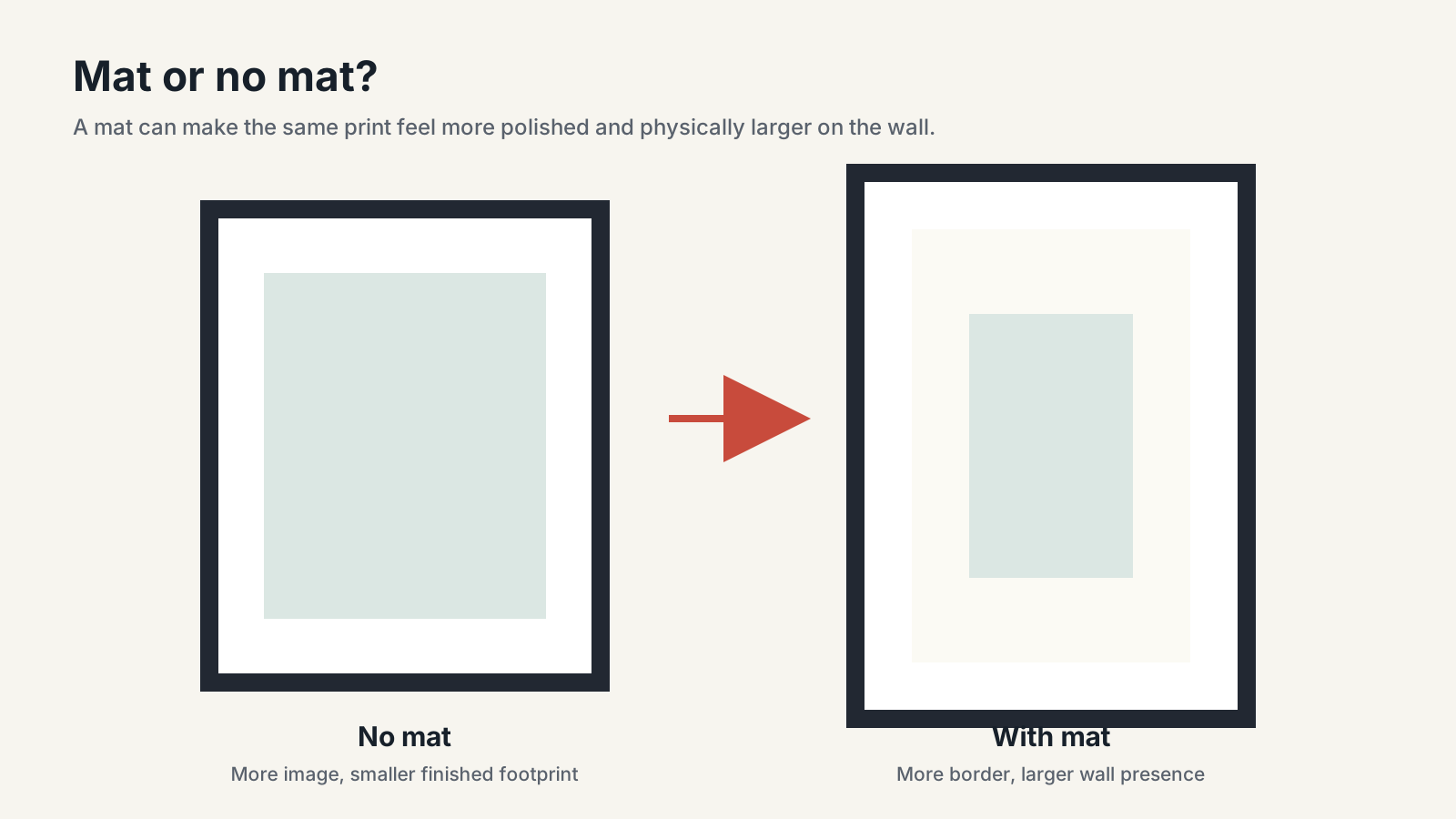
An 11x14 print placed directly in an 11x14 frame will stay fairly compact. Put that same print behind a mat in a 16x20 frame and it has much more presence, even though the artwork has not changed.
The frame size chart is a quick reference for common print sizes, frame openings, and formats. If you are choosing the print dimensions themselves, including US and international poster formats, use the poster size guide.
| Term | What it means | Why it matters |
|---|---|---|
| Print size | The paper or artwork dimensions | Sets the artwork file, crop, and product variant |
| Frame size | The print size the frame is made to hold | Helps buyers find an off-the-shelf frame |
| Mat opening | The visible window cut into the mat | Usually overlaps the print slightly to hold it in place |
| Outer framed size | The full width and height on the wall | Tells you how much wall space the piece will actually use |
For an unframed print listing, plain language works best: "Print size: 11x14 inches. Frame not included." If you sell the piece framed, also list the outside dimensions and say whether the mat is included. Buyers should not have to reverse-engineer those details from a styled photo.
Common wall art frame sizes
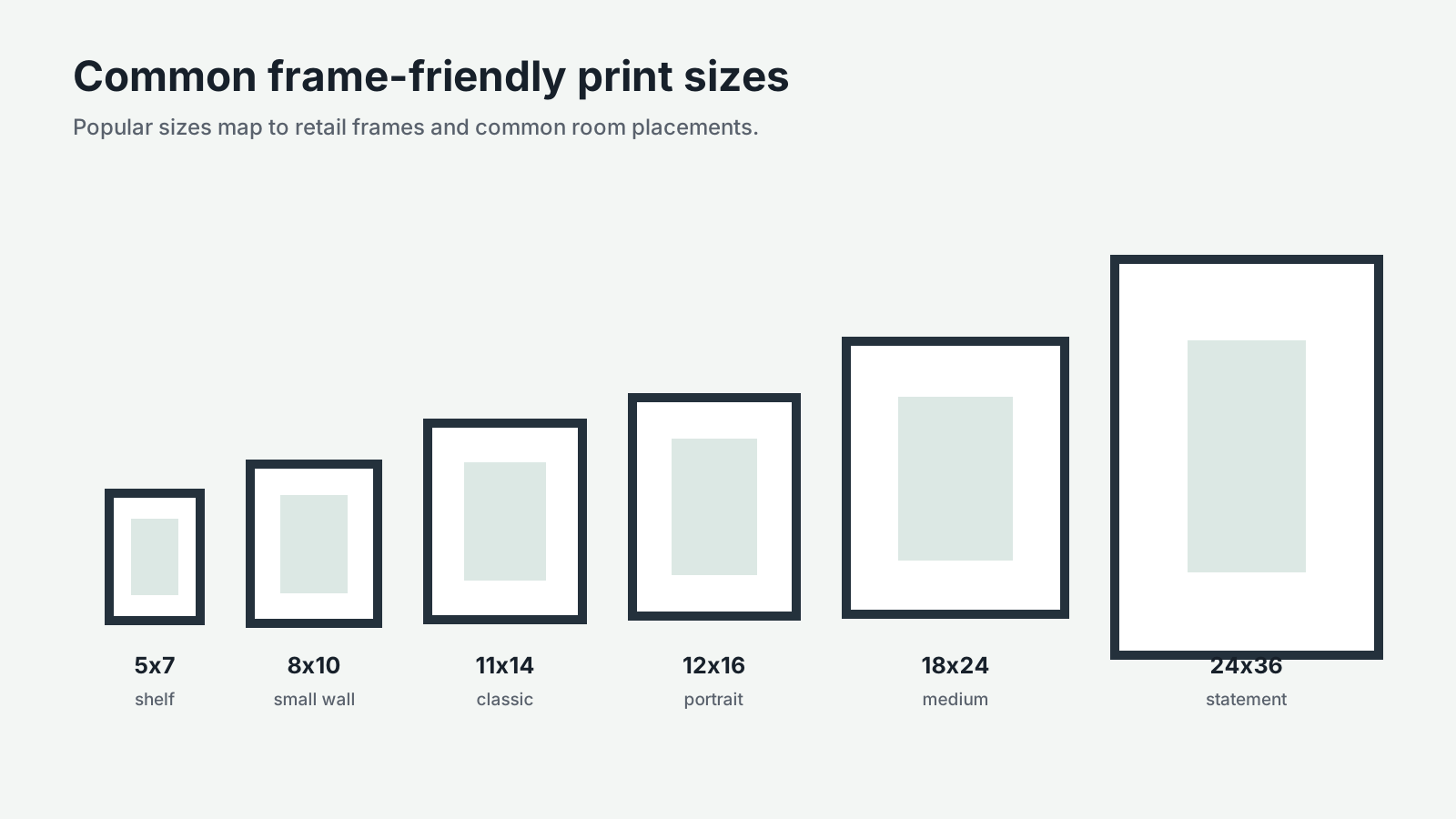
In the US, the sizes you will see most often are 5x7, 8x10, 11x14, 12x16, 16x20, 18x24, 20x30, and 24x36 inches. Availability varies by shop and frame style, but these dimensions are a sensible place to begin if you want buyers to find ready-made frames.
There is no single best size. A 5x7 print is at home on a shelf or tucked into a gallery wall. A 16x20 can hold its own above a chair or narrow console. A 24x36 piece needs enough open wall around it to avoid feeling crowded.
| Print size | Ratio | Where it tends to work |
|---|---|---|
| 5x7 | 5:7 | Shelves, gifts, and small gaps in gallery walls |
| 8x10 | 4:5 | Desks, shelves, and compact walls |
| 11x14 | 11:14 | A classic small-to-medium framed print, with or without a mat |
| 12x16 | 3:4 | Portrait artwork, nursery prints, and narrow walls |
| 16x20 | 4:5 | Above a chair, dresser, or small console |
| 18x24 | 3:4 | Bedrooms, offices, entryways, and posters |
| 20x30 | 2:3 | Large photography and statement prints |
| 24x36 | 2:3 | Large walls and art placed above substantial furniture |
Outside the US, A-series sizes such as A4, A3, and A2 are often easier to frame. These proportions are defined by the ISO 216 standard. They do not match most US frame ratios exactly, so do not assume an A3 print will drop neatly into a 12x16 frame. The standard poster size chart has the common US, metric, and movie-poster dimensions in one place.
Choosing a size for art above furniture
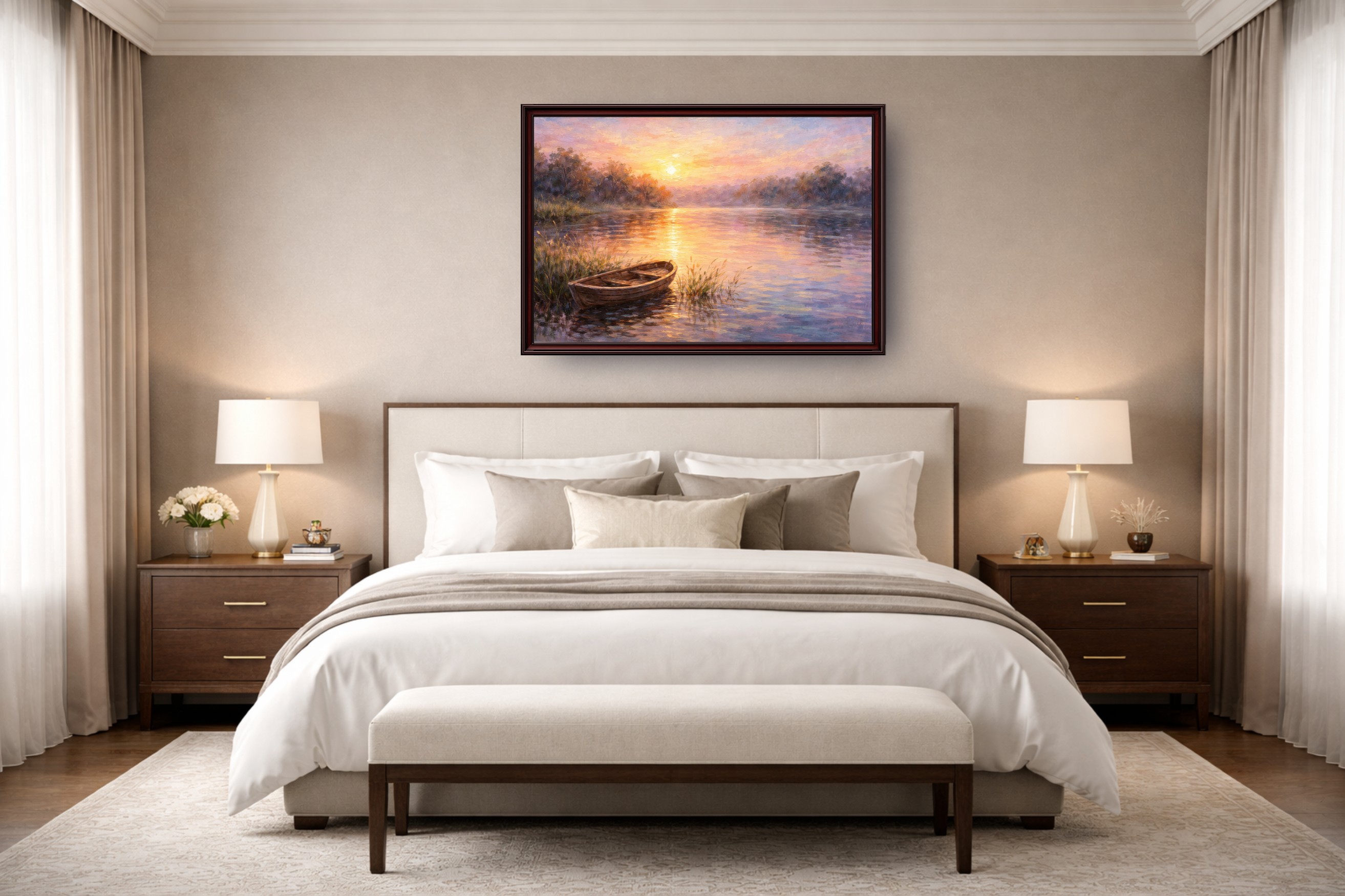
When a frame will hang above a sofa, bed, dresser, or console, measure the furniture first. A useful starting range is 60% to 75% of the furniture width. For a 72-inch sofa, that gives you a target of roughly 43 to 54 inches for the full artwork or arrangement.
That range is a design shortcut, not a building code. A visually heavy frame may look right at the smaller end; a light print with a thin frame may need to be larger. The wall, ceiling height, lamps, and nearby windows all change the balance. This is exactly why taping the outline on the wall, or previewing it in a room mockup, is worth a few minutes.
Leave roughly 6 to 10 inches between the furniture and the bottom of the frame. Go too high and the art can look as if it belongs to the wall rather than the furniture grouping.
The wall art size calculator will do the furniture-to-art calculation for you.
| Furniture width | Starting range for art width | Possible layout |
|---|---|---|
| 48 inches | 29 to 36 inches | One 18x24 frame or two smaller frames |
| 60 inches | 36 to 45 inches | One 24x30, one 24x36, or a pair |
| 72 inches | 43 to 54 inches | One large piece or two 18x24 frames |
| 84 inches | 50 to 63 inches | A triptych, gallery row, or oversized piece |
For a gallery wall, measure the group from its far-left edge to its far-right edge and treat that as one piece of art. The gaps count toward the total width. How to Plan a Gallery Wall Layout covers patterns and spacing, while the gallery wall layout planner can work out a grid for a specific wall and frame count.
When a mat helps (and when it does not)
A mat creates space between the image and the frame. That extra border can calm a detailed photograph, give a small drawing more presence, or make several different print sizes feel related. It also helps keep the surface of some artworks away from the glazing.
But a mat is not an automatic upgrade. Bold posters and artwork with a printed border often look better framed edge to edge. A wide mat can also overwhelm a loose, graphic image. If you are unsure, compare both versions at the size they will actually appear on the wall, not as tiny product thumbnails: the frame visualizer lets you try your own art with and without a mat, and reads out the finished outer size as you adjust it.
| Print size | Common matted frame | How it changes the piece |
|---|---|---|
| 5x7 | 8x10 frame | Still compact, but more finished |
| 8x10 | 11x14 frame | A familiar small wall-art size |
| 11x14 | 16x20 frame | Turns a modest print into a medium wall piece |
| 16x20 | 20x24 or larger | Adds a substantial border and finished footprint |
If a listing mockup shows a mat, say whether the customer receives it. This matters even more for digital downloads, where the frame and mat are almost always styling props rather than part of the product.
Matching aspect ratios to frame sizes
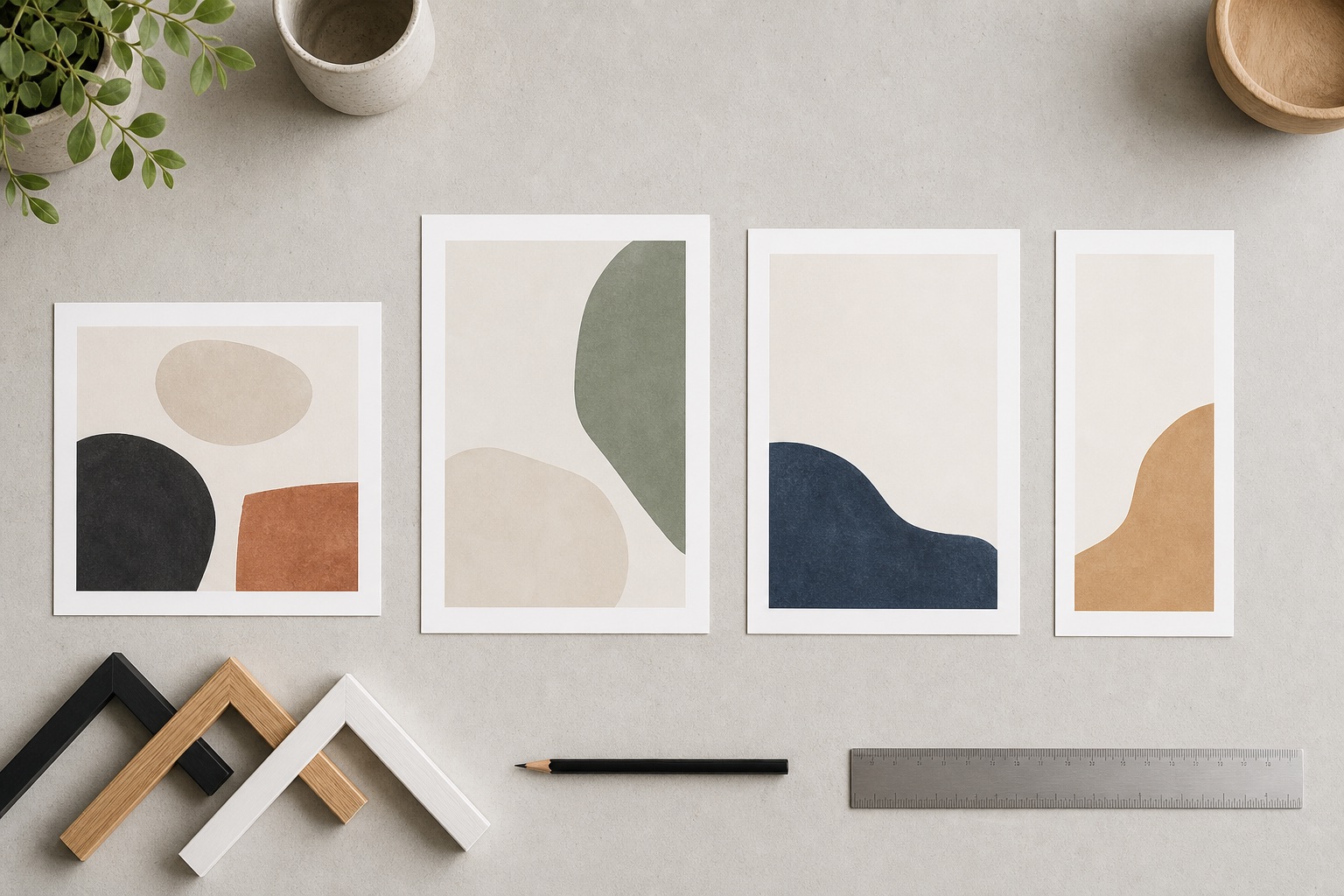
Aspect ratio is the relationship between width and height. It is the reason one artwork file can be printed at 8x10 and 16x20 with no crop, while a 12x18 version of the same file loses part of the image or gains a border.
Group your offered sizes by ratio before making production files. For example, 8x10 and 16x20 both use 4:5. The 12x18, 20x30, and 24x36 sizes use 2:3. An 11x14 frame is its own proportion; it is close to 4:5, but not close enough to use without a small crop or margin.
| Ratio | Common sizes | Useful for |
|---|---|---|
| 4:5 | 8x10, 16x20, 24x30 | Portraits and printable art sets |
| 11:14 | 11x14, 22x28 | A classic frame family that is separate from 4:5 |
| 3:4 | 12x16, 18x24 | Posters, portraits, and nursery art |
| 2:3 | 12x18, 20x30, 24x36 | Photography and large posters |
| 1:1 | 8x8, 12x12, 20x20 | Square artwork and grids |
Cropping is not always wrong. Sometimes a tighter crop genuinely improves an image. The mistake is letting a print service crop every size automatically and discovering too late that a signature, face, or important edge has disappeared. Check each size yourself, and run the largest files through the print resolution checker before publishing them.
A practical size range for artists selling online
More size options can look generous, but each option adds another file, mockup, price, and chance for a customer to choose the wrong thing. Most new shops are better served by a small, deliberate range.
Start with one or two ratio families. A simple 4:5 collection might offer 8x10, 16x20, and 24x30. For 2:3 artwork, 12x18, 20x30, and 24x36 make a useful small-medium-large set. You can add sizes later if customer searches or sales give you a reason.
For each listing, I would include:
- One uncluttered room mockup as the lead image
- A side-by-side size comparison
- A clear note about the frame and mat
- A close crop that shows texture or fine detail
- A second room or frame option, if it helps the buyer picture the style at home
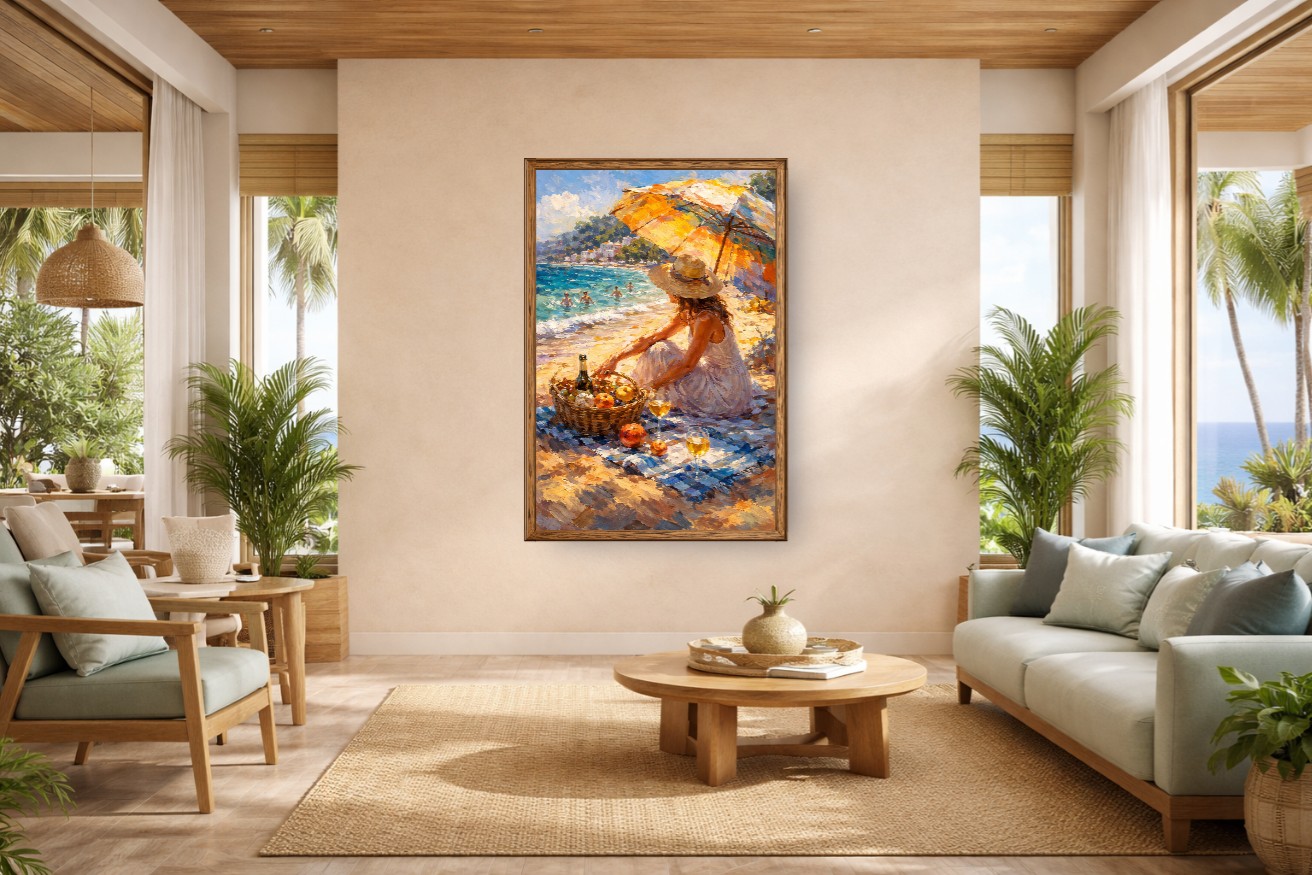
The room image should make the scale clearer, not merely make the listing prettier. You can create consistent views in the wall art mockup generator. If you want the reasoning behind room context, read how a wall art mockup helps buyers feel at home before they buy.
How to choose a frame size
If you already have the print, begin at step two. If you are preparing files for sale, start at the top:
- Check the artwork ratio. Identify whether it is 4:5, 3:4, 2:3, square, or custom.
- Choose sizes within that family. This avoids accidental cropping and makes production easier.
- Decide on a mat. Remember that matting usually means a larger frame and a larger wall footprint.
- Measure the outside of the finished frame. Manufacturer dimensions are better than an estimate when wall space is tight.
- Test it against the room. Use painter's tape, a paper template, or a true-scale mockup.
- For a product listing, label what the buyer gets. State the print size, outside frame size, mat details, and whether the frame is included.
If one offered size needs an awkward crop, do not force it into the range. Make a dedicated version or leave that size out.
FAQ
What frame size is best for an 8x10 print?
Use an 8x10 frame if you want the print to fill the opening. For a wider border, put it in an 11x14 frame with a mat cut for an 8x10 print.
Is 16x20 a good wall art size?
Yes. It is large enough to work as a focal point on a modest wall, but still easy to handle and frame. It usually suits bedrooms, offices, hallways, and the space above a chair or small console. Above a full-size sofa, one 16x20 frame will often look too small unless it is part of a group.
What size frame should I use above a 72-inch sofa?
Try a finished artwork width between 43 and 54 inches. That might be one oversized piece, two medium frames, or a gallery arrangement measured from edge to edge. Mark the outline on the wall before buying, since nearby lamps and windows may push you toward one end of the range.
How big is an 11x14 frame on a wall?
An 11x14 frame holds an 11x14 print (27.9x35.6 cm), and the finished piece is bigger than that. A slim 1-inch moulding makes it about 13x16 inches on the wall. If you buy an 11x14 frame with a mat cut for 8x10, the outside stays about 13x16 while the visible art shrinks to roughly 7.5x9.5. On its own it reads as a small piece; it works best beside a doorway, above a nightstand, or as one slot in a gallery wall. You can see it next to six other sizes, at true scale above the same sofa, in wall art sizes shown to scale.
Is 12x16 a standard frame size?
Yes. 12x16 inches (30.5x40.6 cm) is a common 3:4 frame size that most frame retailers stock. It fits 3:4 artwork edge to edge. A 2:3 or 4:5 print needs a mat, a border, or a crop to sit in it cleanly, so check the ratio before you order.
Should my frame be bigger than my print?
The frame's labeled opening should fit the print, or it should fit the mat around the print. The outside edge will always be larger because the frame profile adds width. A matted frame will be larger again.
Should Etsy print listings show frames?
They can, and a framed room mockup is often helpful, as long as the listing says what is included. If you sell an unframed print or digital file, put "frame not included" where buyers will see it rather than hiding the detail near the bottom of the description.
See the finished size before you commit
The number on a frame box is only part of the decision. Use the WallMockup editor to place the print at its real dimensions in a room before you buy a frame or publish a listing. It is much easier to catch a timid size, an awkward crop, or an overly wide mat on screen than after the order arrives.
For more on building realistic listing images, see The Complete Guide to Wall Art Mockups.